Sustainability can unlock growth, reduce risk and build long-term trust, but only if businesses focus on the right actions. Drawing on two decades of leadership and consulting experience, Anjuli Parker shares practical insights on how SMEs can choose the right sustainability support and avoid costly mistakes.
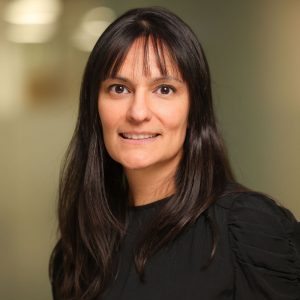
Anjuli Parker has spent more than two decades working across global consultancies, financial services and senior leadership roles in SMEs, supporting organisations to navigate change, improve performance and build long-term resilience. She began her career with Arthur Anderson, also working at Accenture and Capco before moving into senior Change and COO roles at Barclays Bank. She has worked across the UK, Europe and Asia (spending 12 years in Singapore) and, after having her first child, left Banking and moved into a series of C-suite positions working in SMEs across the UK and Asia.
She went on to found Sustainable Business Ventures, where she supports SMEs and growing organisations to use sustainability as a commercial advantage rather than a compliance exercise. Alongside her client work, she is an Assessor for the University of Cambridge Institute for Sustainability Leadership and has supported organisations to achieve EcoVadis Gold accreditation. With deep experience across strategy, operations and sustainability delivery, she brings a practical perspective shaped by what works in the real world.
Here are her insights on choosing the right sustainability support.
Sustainability is now firmly on the business agenda. Customers, investors and supply chain partners increasingly expect organisations to demonstrate progress, not just ambition. For many SMEs, the challenge is no longer whether to act, but how.
As sustainability activity grows, so does the number of consultants, tools and platforms offering support. Some bring real value. Others add unnecessary complexity. Choosing the right support can accelerate progress and build trust. Choosing the wrong approach can waste time and (already limited) resources.
Understanding what good sustainability support looks like is the first step.
Your Starting Point: Focus on what matters most
Effective sustainability support starts with prioritisation.
For most SMEs, progress does not come from trying to do everything at once. It comes from understanding where the greatest risks and opportunities sit and taking proportionate action. This may involve energy use, carbon measurement, people policies, governance or supply chain practices. Your focus will be different depending on whether you are a service provider or sell a physical product; it will also depend on your industry and sector, and who your clients or customers are.
Good consultants help businesses identify what matters most and build a clear, realistic plan forward.
Check their area of specialism – the field of sustainability is broad – do they partner with specialists? Do they manage third parties on your behalf? Do they only talk about Carbon footprints and Net Zero?
This discovery work should not tie you into a long-term contract – it may be that once you have a defined priority list, you’re able to start on your journey using the team you already have and online resources.
Be specific on the outputs you are looking for and ensure payments tie to deliverables.
Look for clarity, not complexity
Sustainability involves data, standards and regulation, but it should never feel inaccessible.
The right support makes complex topics easier to understand. It provides clear explanations, practical recommendations and confidence in decision-making. If sustainability feels more confusing after engaging support, something is not working.
Remember you are paying for a service – if you don’t understand what you’re being told, it’s not you, it’s them!
Clarity is essential for building trust and momentum.
Choose an experience that fits your business
What works for large Corporates is rarely appropriate for SMEs.
Sustainability advice should reflect the size, sector and maturity of the organisation. Whilst the Top-4 consulting firms are brilliant to engage where you have the funds and organisational complexity (such as operating across multiple regulatory jurisdictions), they are unlikely to be your first point of contact if your revenues are less than £10m.
Generic frameworks; Sustainability accreditations, and one-size-fits-all approaches often lead to frustration and limited real impact. Effective support recognises the constraints within which the organisation is operating and develops a plan that is achievable within these boundaries.
Progress should feel achievable, not impossible.
Build credibility through trusted networks
Many businesses now use professional networks and platforms to identify sustainability expertise.
Platforms such as Leafr connect organisations with vetted sustainability specialists across areas including carbon accounting, ESG reporting and strategy development. These networks help reduce risk, save time and ensure businesses can access the right skills when they are needed.
Using trusted platforms can provide reassurance, particularly for SMEs engaging sustainability expertise for the first time.
There is also the Global Advisory Alliance, which brings together senior expertise from across the globe, covering many sectors/industries. Their consultants are specialists across governance, sustainability, and digital transformation strategy.
There are lots of accreditations that you can also look for – check if the consultants are registered with the Institute of Sustainability & Environmental Professionals or active members of the Association of Sustainability Professionals. Also, ask them to explain how they sustainably run their business and whether they measure their ESG impacts.
Think long term, not one-off
Sustainability is not one project. It is an ongoing process of improvement, learning and adaptation. Trends will continue to evolve; regulations come in, and technology provide solutions previously unknown.
The most effective support builds internal understanding and capability over time. Rather than creating dependency, it enables teams to make informed decisions and embed sustainability into everyday business operations.
When approached in this way, sustainability becomes part of long-term value creation.
Take the next step
If you are unsure where to begin or how to prioritise your sustainability activity, a simple assessment can provide clarity.
SBV’s free sustainability survey helps identify your current position and highlights the areas most relevant to your business. Completing the survey provides a clear starting point and access to a complimentary thirty-minute consultation to discuss your results and suggest a minimum of 3 actions to take.
To begin your sustainability journey with confidence, complete the survey and book your free consultation at:
www.sustainabilitysurvey.scoreapp.com
Or visit
www.sustainablebusinessventures.co.uk
References
https://www.planetmark.com/news-and-blogs/sustainability/what-is-a-sustainability-consultant/
https://www.reegy.com/blog/how-to-find-the-right-sustainability-consultant/
https://carbonbetter.com/story/sustainability-consulting/
Websites –
https://www.globaladvisoryalliance.com/